MAX Stone Electric Radiator
The MAX Electric Radiator uses advanced Heating Storage technology to deliver efficient, natural, and sustainable heating. MAX is a high-efficiency radiant heater that stands out for its exceptional performance. Its most remarkable feature is its ability to deliver high thermal output even when turned off.
Our lava basalt Factory
Innovation & Performance
How It Works
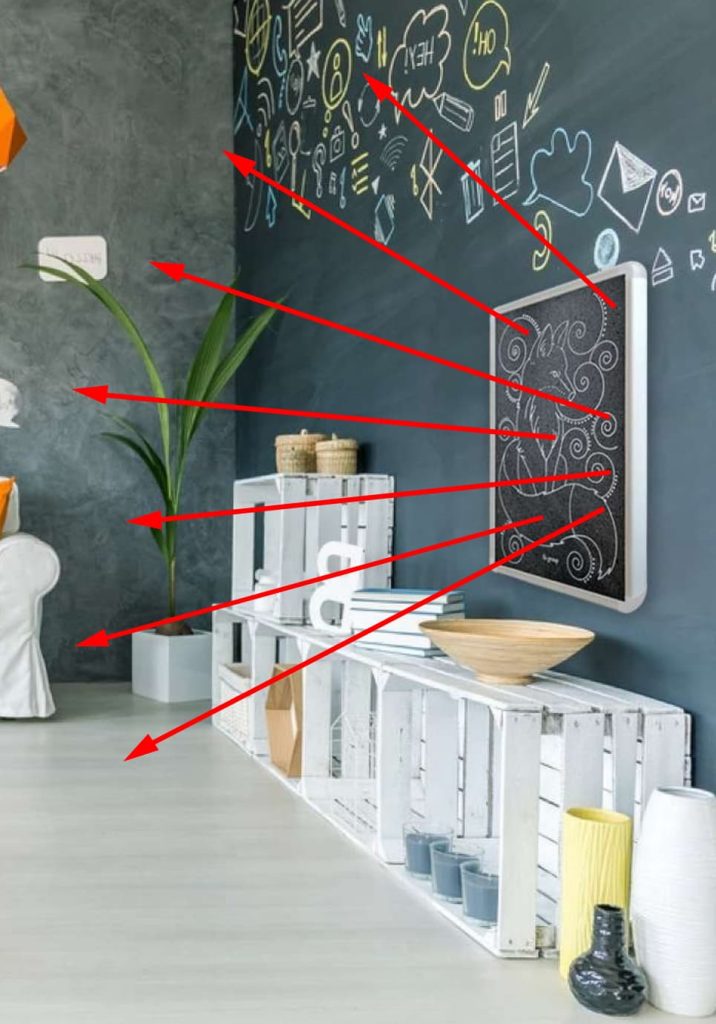
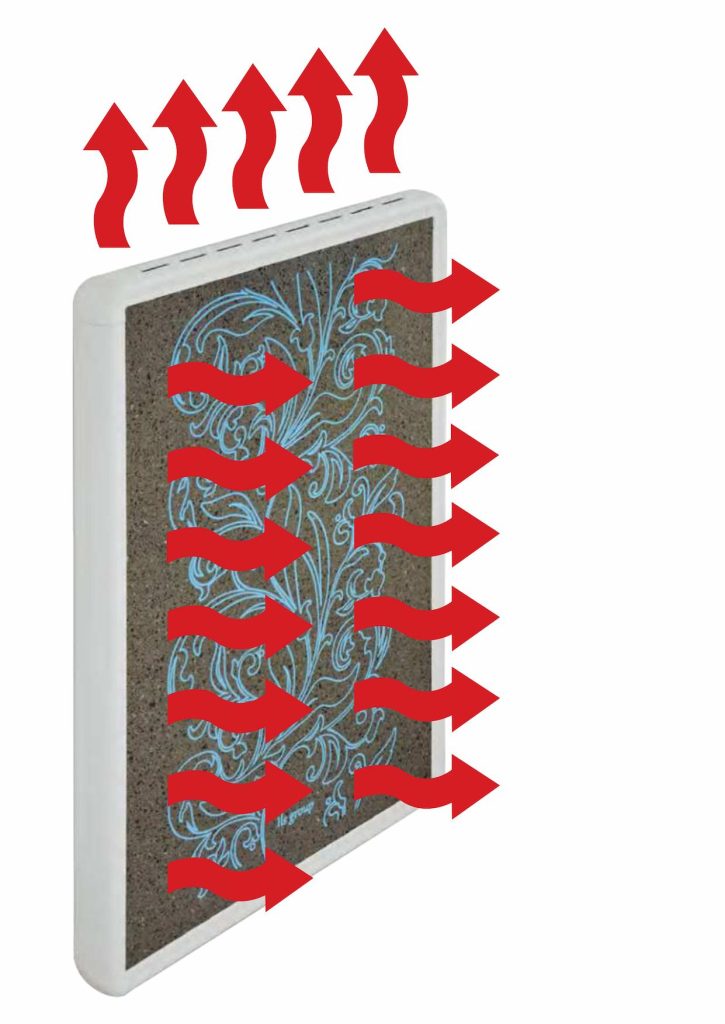
When electricity powers the embedded heating element within the radiator’s layered structure, it warms two surrounding lava stone plates. These plates release heat through two natural processes: Natural Convection: The air around the panel warms, rises through the metallic structure, and is released from the upper part of the radiator. - Radiation: The front lava stone plate radiates heat outward, evenly warming the space in front of it. Thanks to the high thermal mass of lava stone, heat is gradually stored and released over time, ensuring a stable and uniform temperature—even after the radiator is switched off.
Heating Technology
This heating method is healthier than traditional systems: it avoids forced air circulation and prevents dust particles from burning. Temperature is precisely managed by an electronic control board developed by us with therm-couple sensors placed behind the front panel to monitor and regulate optimal heat output at minimum running costs.
University Laboratory Testing
Test temperature‑degradation graphs showing how the lava‑stone Max Radiators cools down after reaching steady‑state temperature have been carried out by the university of TRENTO*. In order to understand the energy efficiency of the MAX Lava Stone Radiators in greater detail — especially from an energy‑performance perspective — several laboratory tests were carried out by varying the set point surface temperature. To verify the actual temperature, an external contact therm-couple was also used, connected to TRENTO UNIVERSITY's data‑acquisition system that made it possible to record the voltage applied to the internal heating element, thereby identifying with great precision the phases in which the element switched on and off. *Department of Industrial Engineering.
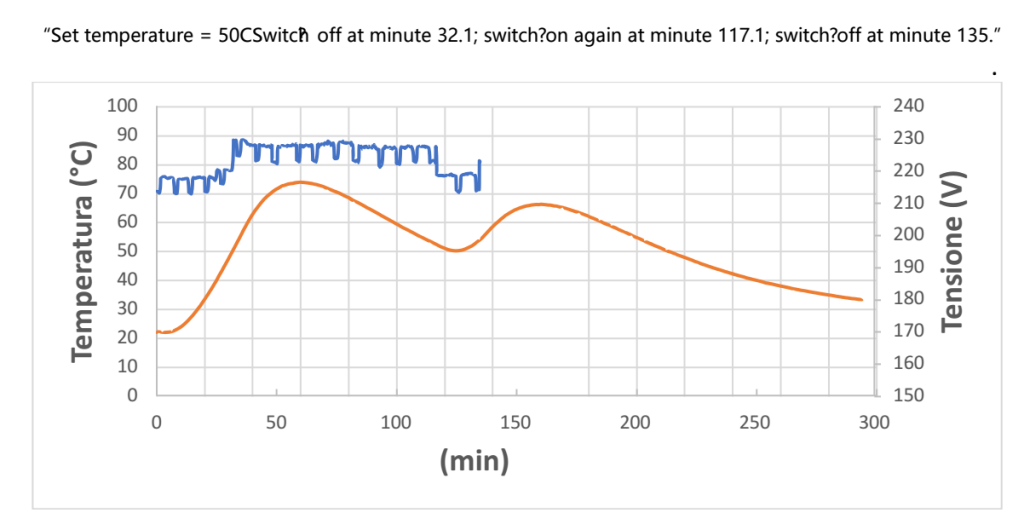
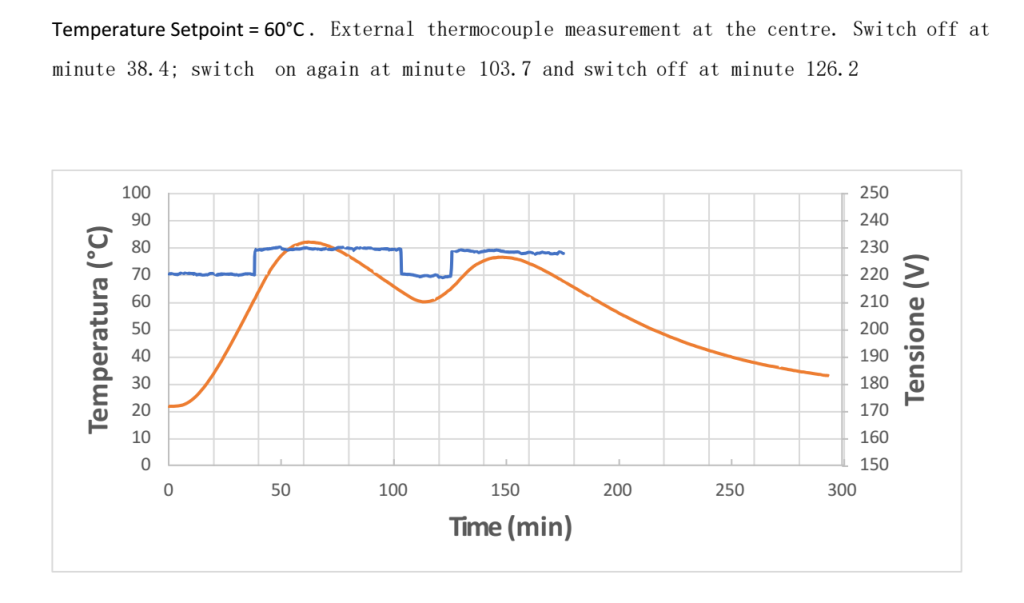
From an energy perspective, during the start warm‑up phase the system absorbs around 3250 kJ in 30 minutes, equivalent to 1 kWh. Part of this energy heats the radiator’s LAVA sandwich structure containing the electric heating element, and part heats the air through natural convection. The significant thermal inertia of the radiant Lava stone panel, as shown in the graphs, largely depends on the heat capacity of the material used for the surface lava slab and the sandwich layer, namely Basalto Lava stone, which has a value of approximately 1 kJ/kg°C. To this we must add its low thermal conductivity, 0.022 W/cm°C, and its relatively low density, 2.47 g/cm³.
Meaning that the heat generated by the electric element is stored within the lava stone and released very slowly, ensuring a high degree of temperature uniformity. Quantitatively, the sandwich and the radiant slab are able to absorb around 1500–1600 kJ during a heating phase of about 30 minutes, while an equivalent amount of energy heats the air passing through the MAX Radiators by natural convection, acting as heat accumulators, ensuring that the heat is distributed evenly over time.
Certifications
MAX Lava Stone Radiators products are Class 2 rated and comply fully with UK building regulations, UKCA marking, IMQ and CE Certification, BS British Standards.